
How to AI Responsibly.
How, when, and where to use AI effectively - and when not to use it at all.

You can build a website with AI. There are a number of services out there that will do this for you from start to finish. And in some cases that’s a reasonable call. But for brands that have something real to communicate, something to prove, something to sell—it just simply doesn’t net out. When you use one of these services you end up skipping the research, skipping the design, skipping the interactions. Simply put the result is people are going to skip engaging with it.
With the introduction of tokens these services are no longer free (and rightfully so). This leaves folks who have been raving about these new tools to confront the reality of their limitations. Now that there are costs associated with them there’s a real analysis to be done — AI from start to finish, an internal team, or an agency. Here are a few considerations to help decide on the best path forward:
Narrow the scope, increase the quality of the output.
AI is pretty good with very specific and narrowly defined tasks. For example, taking designs created in Figma and turning those into code. Even this requires significant additional direction — framework, semantic HTML, telling the AI not to take creative liberties, and so on. Give AI the wide task of designing and building a site, and it needs to make hundreds of decisions to do so. Each is a potential inflection point where things go off the rails, producing cascading failures or compounding adjustments. The end result is either A) an unworkable output, or B) you spend as much time and money finessing the result as you would have had you engaged a creative partner or agency.
We ran into this directly. When attempting to output production code from our Figma designs through prompting, the level of specificity required was high enough that we ended up building a custom Figma integration — essentially a plugin that exports our designs in a structured format the AI can actually work with reliably. More setup upfront. Significantly less back-and-forth in the build. The result is a tighter process for us and a more efficient task for the model — less interpretive work, fewer tokens, better output.
Pattern recognition isn’t judgment.
AI is extraordinarily good at synthesis. It can process thousands of design references, generate copy variations, and produce something that looks, at a glance, like the real thing. What it can’t do is make an informed judgment call.
It can’t read a market and decide where to position you. It can’t look at your brand and tell you what’s wrong with it. It can’t sit across from your team, understand what you’re actually building, and translate that into an experience that earns trust before it asks for a conversion.
Judgment isn’t generated. It’s built over years of working with real brands, with real teams, and with real stakes. This is why we NEVER use AI for interactive design. We’ll use it to help develop content or in place of stock photography but when it comes to interactive, AI simply just can’t do it better.
The grid pays for every bad prompt.
Narrowing the scope of what you ask AI to do isn’t just good for quality. It’s good for the planet.
Every query has a cost — not just in dollars, but in electricity. AI-focused data centers grew energy consumption by 50% in 2025 alone. The IEA projects global data center electricity demand will more than double by 2030, reaching nearly 950 terawatt-hours — making it one of the few sectors where emissions are set to increase.
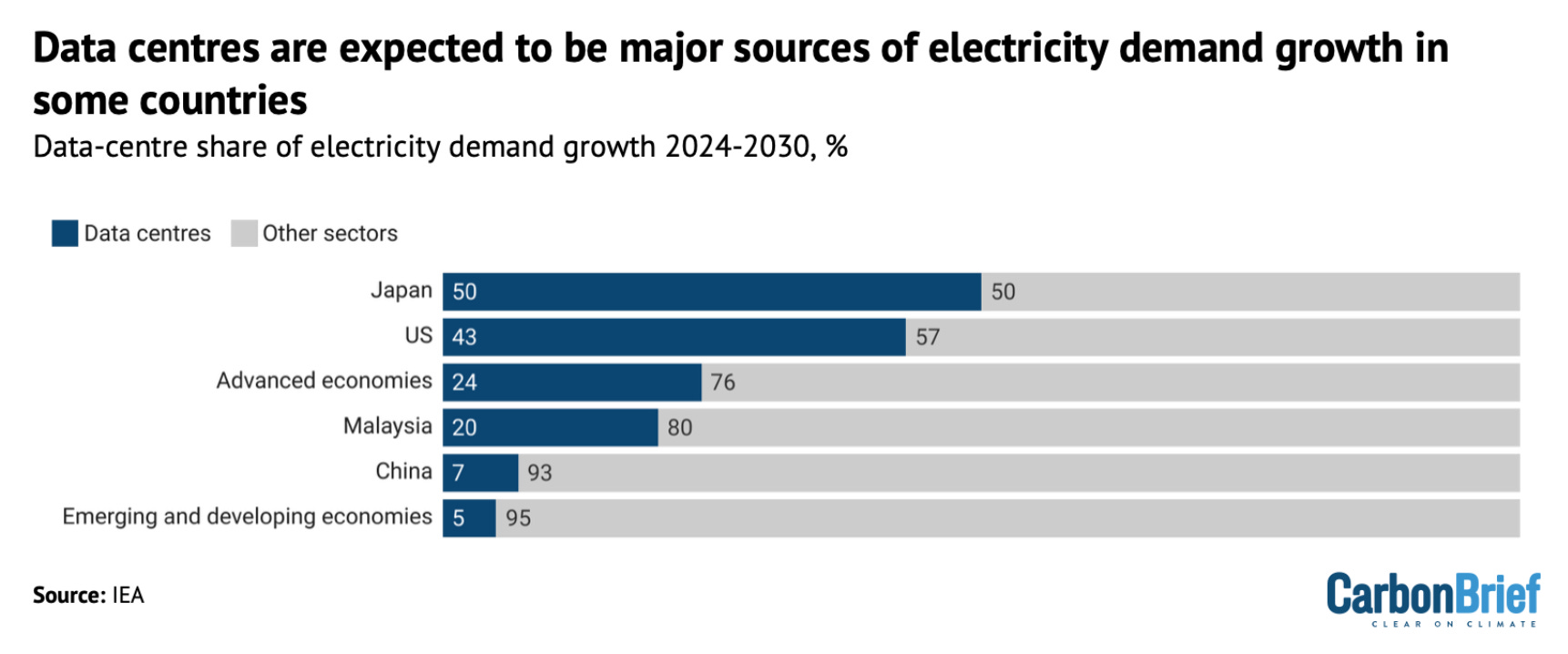
The nature of the task directly affects this draw. A narrow, well-defined prompt is processed with a fraction of the computing resources required than that of an open-ended one: design and build me a website. The broader the task, the more decisions the model has to make, the more tokens it burns, the more energy it pulls.
Using AI intentionally — for specific, bounded tasks where it genuinely excels.
Where AI fits — and where it doesn’t.
There are some projects where we don’t use AI at all and others where we’ll use it intentionally. At the end of the day the question is really, can AI do this task as well or better than me and can it do it more efficiently - if the answer is no, then do it yourself. There is no single right answer as to when or when not to use AI, but the more you can be intentional with its usage the better off your end product and the world will be.
About Non-Linear Studio
Non-Linear Studio isn’t for everyone. We work with those who value precision, pursue excellence, and push what’s next. For the bold—and the detail-obsessed. No templates. No repetition. Nothing off the shelf.